


 Here at RADIUS, we understand that your pets are your family. So, why not give your favorite canine the best dental care there is? Check out our USDA Organic Canine Gel Toothpaste and Canine Organic Dental Solutions Kit here and keep reading for more information!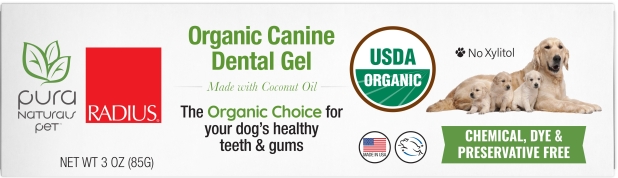
"What makes it the best?" you ask? Let's break down the ingredients!
- Coconut oil helps naturally whiten teeth and reduce bacteria.
- Sweet potato is not only delicious, but it is packed with Vitamin A - good for your pup's skin, coat, and teeth!
- Cinnamon powder is naturally antimicrobial, antibacterial, and anti-inflammatory. It helps brain function and is safe for dogs with arthritis/diabetes!
- Olive leaf extract helps sooth inflamed gums.
- Fennel extract is rich in Vitamin C and helps fight gingivitis.
- Kelp extract contains vitamins and amino acids that help reduce plaque and tartar.
- Salt helps reduce bacteria and freshen breath - because no one, not even dogs, want to have stinky breath!
- Thyme leaf oil is naturally antimicrobial and helps reduce tooth decay.
Not only does our pawsome canine tooth gel contain all of these beneficial ingredients, but it doesn't have any of the nasty ones, either. Xylitol free, chemical free, preservative free, and dye free - what could be better?
Don't forget that our pet products are Leaping Bunny Certified - aka CRUELTY FREE!

Keep those canines healthy - get yours now!
What is organic dog toothpaste, and is it safe for dogs?
Organic dog toothpaste is a brushing gel made with certified organic, food-grade ingredients and formulated to be swallowed safely, since dogs do not rinse and spit. That is the main difference between a dog toothpaste and the tube in your bathroom: human toothpaste is made to be spit out, and some formulas contain xylitol, a sweetener that is not considered safe for dogs. A dog-specific gel skips it entirely.
The RADIUS USDA Organic Canine Gel Toothpaste is xylitol free, chemical free, preservative free, and dye free, and it is Leaping Bunny Certified. It is a gel rather than a foaming paste, which tends to make brushing easier on a wiggly dog — less froth, less mess, less to rinse away.
The "USDA certified organic" seal is not a marketing word. It means the ingredients were grown and handled under a defined federal standard, which is worth knowing when the product is going straight into your dog's mouth and stomach a few times a week.
If you are new to brushing your dog's teeth, the good news is that it does not require special equipment or a long routine. A soft brush or finger brush, a pea-sized amount of gel, and a calm minute or two is the whole thing.
Can dog toothpaste help with gum disease?
Brushing is about consistency, not rescue. A toothpaste on its own will not treat gum disease, and any dog with red, bleeding, or swollen gums, loose teeth, or persistent bad breath should be seen by a veterinarian before you change anything at home. [NEEDS: veterinary source or vet-reviewed statement if a stronger claim is desired.]
What regular brushing can do is help keep things steady between checkups. Several of the ingredients in the canine gel were chosen with gums in mind: olive leaf extract helps soothe inflamed gums, fennel extract is rich in Vitamin C and helps fight gingivitis, and kelp extract contains vitamins and amino acids that help reduce plaque and tartar. Coconut oil and salt round it out by helping reduce bacteria and freshen breath.
A realistic expectation helps here. Dogs that are brushed a few times a week, starting young, tend to arrive at their dental checkups in better shape than dogs brushed once in a while when someone remembers. Small and steady beats one heroic scrubbing session.
How often should you brush your dog's teeth?
Daily is ideal, but most households land somewhere between three times a week and every other day — and that is genuinely useful. The routine matters more than the count.
A simple way to start:
- Put a small amount of gel on your finger and let your dog lick it off for the first few days, so the flavor becomes familiar. Sweet potato and cinnamon give it a taste most dogs take to quickly. - Move to a finger brush or soft canine brush, working on the outer surfaces of the back teeth first — that is where buildup tends to collect. - Keep sessions short. Thirty seconds a side is plenty at the beginning. - Attach it to something that already happens every day, like the evening walk or the last meal, so it does not depend on memory.
There is no rinsing step. The gel is made to be swallowed, so you can simply put the brush away when you are done.
If your dog resists, back up a step rather than pushing through. Routine drift is normal, and picking it up again next week is fine.
Organic dog toothpaste vs. homemade or DIY dog toothpaste
Homemade dog toothpaste recipes usually come down to baking soda, coconut oil, and something flavorful. They are inexpensive and people like knowing exactly what went in. The trade-offs are worth naming: baking soda is abrasive and unpleasant tasting to many dogs, homemade mixes have no preservation system and can spoil, and it is easy to include something like a sweetener or a spice that is not appropriate for dogs.
A formulated gel takes the guesswork out. Each ingredient in the canine gel is there for a reason — thyme leaf oil is naturally antimicrobial, cinnamon powder is naturally antimicrobial, antibacterial, and anti-inflammatory, and sweet potato brings Vitamin A that supports skin, coat, and teeth — and the ratios stay the same from tube to tube.
Enzymatic dog toothpastes work differently again, relying on added enzymes to break down surface buildup. The organic approach leans on plant ingredients instead, which is the same thinking behind the organic toothpaste ingredients on the human side of the shelf. Either can fit a routine; the one your dog will actually sit still for is the one that works.