


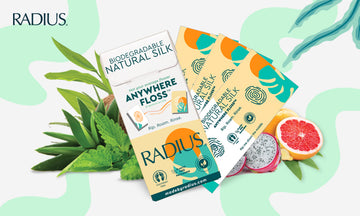
We all know the importance of flossing for good oral health, but did you know that the materials used in floss can impact not only our teeth but also our overall health and the environment? Many conventional flosses are made from synthetic materials that can be harmful to both the environment and our health. RADIUS, a leading manufacturer of eco-friendly oral care products, offers natural and organic floss options that are gentle on our teeth and gums while being kind to the environment. Let's explore the benefits of using natural and organic materials in floss, with a focus on the options provided by RADIUS.
Traditional flosses are often made from nylon or other synthetic materials that can be rough on our teeth and gums. These materials can cause irritation and even damage to the gums and enamel. Natural and organic flosses, on the other hand, are made from gentle and non-toxic materials such as silk, bamboo, and plant-based wax. RADIUS offers floss options made from these materials, which are soft and gentle on our teeth and gums, promoting good oral health without causing irritation.
Many conventional flosses contain harmful chemicals such as PFCs and PFAS, which are known to be toxic to both humans and the environment. Natural and organic flosses, like those offered by RADIUS, are free from these harmful chemicals, making them a safer and healthier option for both us and the environment. The natural ingredients in RADIUS flosses are biodegradable and break down easily, reducing their impact on the environment.
Traditional flosses are often made from non-biodegradable materials such as nylon, which can take centuries to break down and contribute to environmental pollution. RADIUS offers eco-friendly floss options made from natural and sustainable materials like silk, which are biodegradable and compostable, reducing their impact on the environment. Moreover, RADIUS' floss packaging is made from recycled and recyclable materials, further reducing the impact of their products on the environment.
Natural and organic flosses, like those offered by RADIUS, are just as effective at cleaning between teeth as conventional flosses. RADIUS offers a range of floss options, including silk floss and vegan waxed floss made from plant-based materials like candelilla wax, that can effectively remove food particles and plaque between teeth, promoting good oral health.
Using natural and organic flosses can have a positive impact on our overall wellness. By choosing products that are gentle on our teeth and gums, and free from harmful chemicals, we can promote good oral health and prevent various health issues. Additionally, choosing eco-friendly products can promote a sense of well-being and mindfulness. When we choose to use sustainable products, we are making a conscious decision to care for our environment and our health.
Using natural and organic flosses like those offered by RADIUS is not only beneficial for our oral health but also for the environment. These flosses are gentle on our teeth and gums, free from harmful chemicals, sustainable, and effective at cleaning between teeth. By making a small change in our daily routine, we can make a big impact on our environment and our health. If you are looking for an eco-friendly and effective floss option, RADIUS offers a range of natural and organic floss options that are gentle on your teeth and gums while being kind to the environment.
Is organic floss as effective as regular floss?
Yes. Organic and natural floss removes food and film between teeth just as well as conventional nylon floss, because flossing works mechanically — the fiber sweeping along the side of each tooth is what does the cleaning, not the material it is spun from. Silk, plant-based fibers, and natural waxes all do that job.
The practical differences show up in feel rather than in cleaning power. Nylon floss is often coated in synthetic slip agents such as PFAS to help it snap through tight contacts. Natural floss uses coatings like plant-based wax instead, which glides more slowly and tends to feel softer against the gums. Some people prefer that; others need a moment to adjust to it.
The more important variable is consistency. A floss you find comfortable and actually reach for every night will do more for your routine than a technically slicker one that stays in the drawer. That is why choosing between natural and organic floss options is mostly a question of comfort, materials, and habit — not effectiveness.
What is a non-toxic floss?
Non-toxic floss is floss made without the synthetic coatings and additives commonly used to help conventional floss slide. In practice, people using the term are usually looking for floss free of PFAS and PFCs, free of artificial flavors and sweeteners, and made from a fiber that breaks down rather than one that lasts for centuries in a landfill.
When comparing labels, a few things are worth checking:
- The fiber: silk, or a plant-based fiber, rather than nylon - The coating: natural waxes such as candelilla wax or carnauba wax, rather than an unnamed "glide" agent - Added flavor: natural flavoring, or none at all - The container: whether it is refillable, recyclable, or BPA-free plastic - Whether the floss itself is described as biodegradable or compostable
One note worth making calmly: "natural" is not a regulated term on oral care packaging, so it can mean very little on its own. The useful signal is a brand naming the actual fiber and the actual wax. If a package will not tell you what the floss is made of, that is the answer.
Natural floss for tight teeth: silk or waxed plant-based floss?
Tight contacts are the most common reason people give up on natural floss. Conventional floss is engineered to snap through narrow gaps, and switching to a softer fiber can feel like a step backward for the first few days.
The fix is usually technique rather than product. Instead of forcing the floss down, ease it in with a gentle side-to-side sawing motion, then curve it into a C-shape against one tooth and slide it up before repeating on the neighbor. Shredding almost always means the floss is being pushed straight down through the contact rather than worked in.
Between the two main natural options, waxed floss generally handles tight teeth more comfortably than unwaxed, because the wax coating reduces friction as the fiber passes through. Silk floss tends to feel finer and softer; plant-based waxed floss tends to feel a little firmer. Either can work — it is worth trying both for a week each rather than deciding after one night.
[NEEDS: confirmed thread thickness or denier for RADIUS Silk Floss® and the vegan waxed floss, if a specific comparison is to be made.]